

At the confluence of the Maumee and Auglaize Rivers, the City of Defiance is physically and culturally shaped by water. Its 20 parks and three river corridors form the backbone of daily life, providing places to gather, play, reflect, and connect. Over time, however, aging infrastructure, fragmented trail systems, limited accessibility, and underutilized floodplains revealed the need for a comprehensive and forward-looking strategy. To meet that need, the City commissioned the Parks & Riverfront Master Plan and selected JPR as the design firm to guide the effort.
From the outset, JPR — in coordination with Hometown Initiatives, LLC — reframed the assignment. Rather than approaching the work as a series of isolated park upgrades, the team established a cohesive, system-wide framework that repositions parks and river corridors as interconnected civic infrastructure essential to community health and vitality.
Grounded in four measurable goals, the Master Plan links every design decision to clear, long-term community outcomes:
· Public health and social justice
· Environmental resilience
· Vibrancy and placemaking
· Connectivity
These guiding principles shaped objectives such as safer playgrounds, accessible river access, revitalized downtown connections, expanded recreation opportunities, and responsible floodplain management — ensuring that each recommendation advances both immediate community needs and long-term system performance.
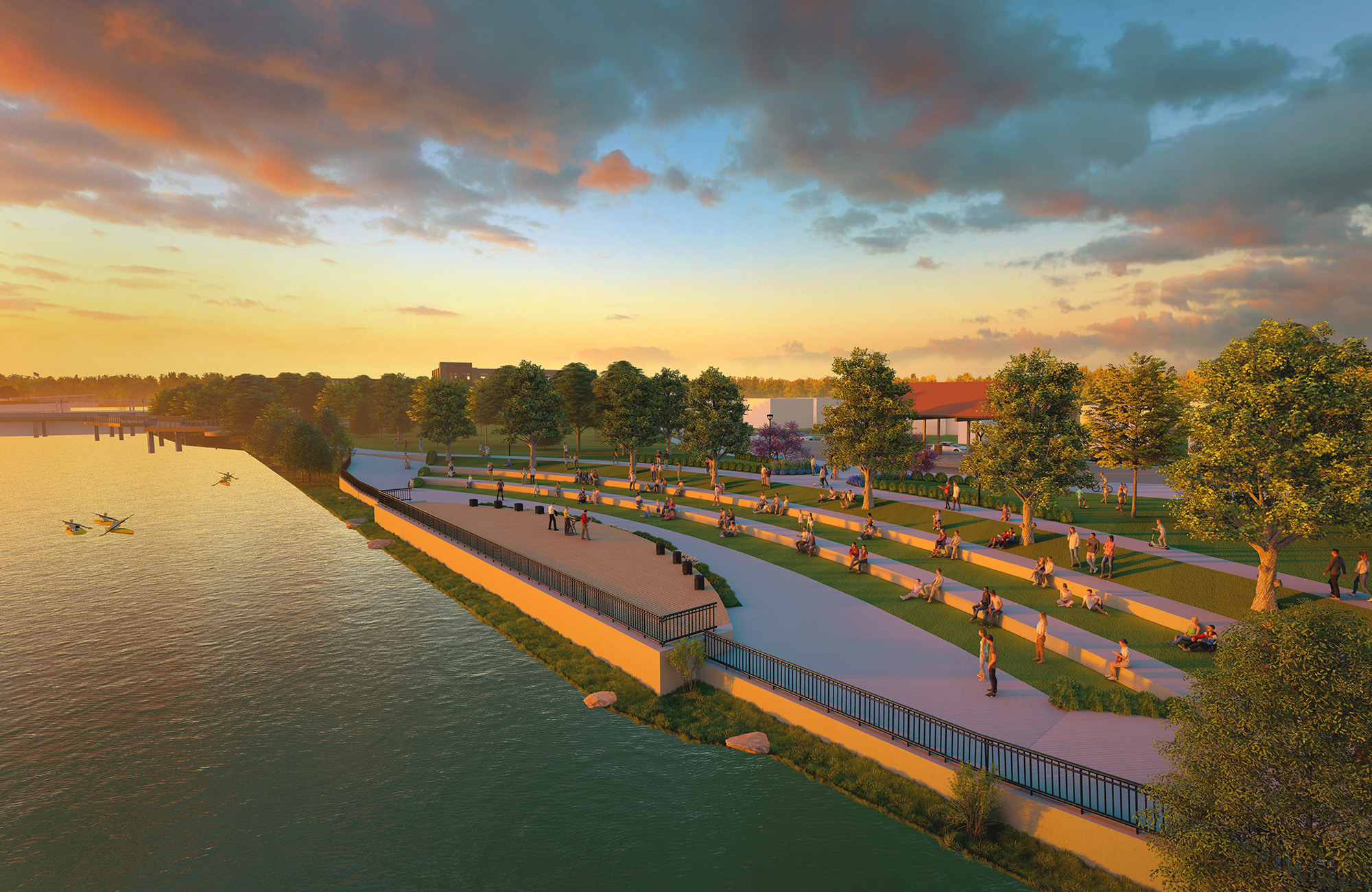
A comprehensive inventory analysis evaluated hydrology, topography, vegetation, infrastructure condition, circulation patterns, and surrounding land use across all parks and river corridors. Drone documentation, GIS mapping, and historical research ensured that design responses were informed by both environmental systems and cultural heritage.
This technical foundation was paired with a robust public engagement process that reached nearly 2,500 residents through surveys, workshops, stakeholder meetings, and community outreach. An 18-member steering committee representing City leadership, schools, health networks, downtown businesses, and civic organizations provided guidance, helping translate community priorities into implementable solutions.
“I think the one thing that impressed me the most is the fact that the entire team HEARD what the public and stakeholders were saying and were very intentional in making sure the concepts incorporated what the public wanted. That is something not always seen with consultants.” - Melinda Sprow, City Engineer, City of Defiance
Hydrology and floodplain dynamics directly shaped the design response. Instead of viewing flood-prone areas as limitations, the Master Plan reimagines them as resilient green infrastructure. Wetland gardens, native plant communities, and expanded tree canopy improve stormwater management, enhance habitat, reduce maintenance demands, and increase user comfort. River corridors are strengthened as both ecological and recreational assets, integrating habitat restoration, flood mitigation, and safe public access.
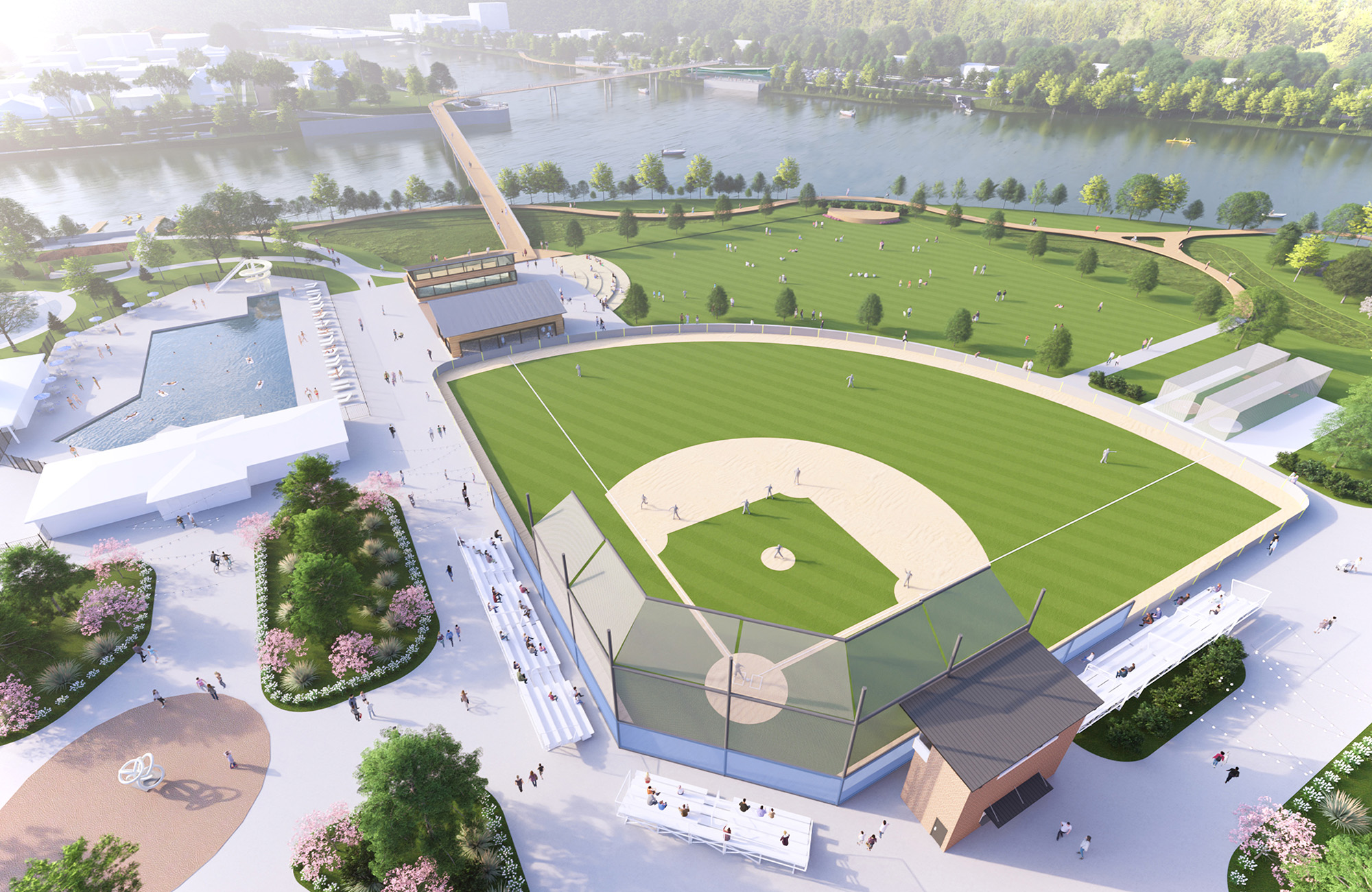
Strategically placed pedestrian bridges, boardwalks, and trail connections close critical gaps, linking neighborhoods, downtown destinations, parks, and regional trail systems while reinforcing Defiance’s historic relationship to the river confluence.
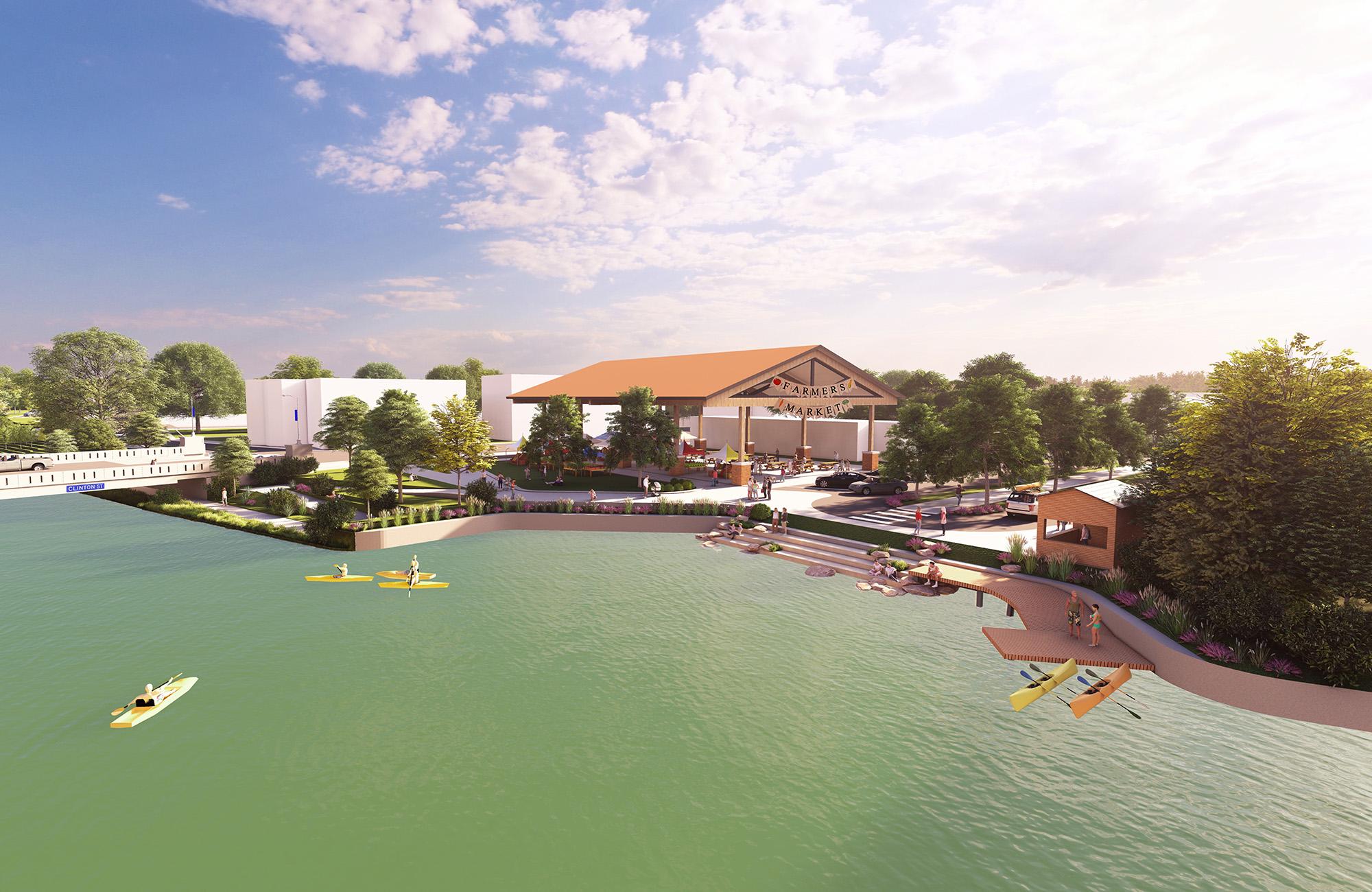
Functionality and inclusivity are central throughout the system. The plan introduces ADA-accessible kayak launches, inclusive play environments, outdoor fitness amenities, improved lighting, and enhanced visibility to strengthen safety and accessibility. Continuous pedestrian and bicycle networks encourage active transportation and connect residents more directly to everyday destinations. Cultural interpretation and Native American tribute spaces are thoughtfully integrated, ensuring that Defiance’s identity as a historic river city is celebrated alongside environmental performance.
A defining strength of the Master Plan is its dual-track implementation model. Each park includes a prioritized action plan with cost estimates, funding pathways, and timelines, transforming the document into an operational guide rather than a static vision. Immediate quick wins, such as trail connections and accessibility upgrades, build public trust and visible momentum. Larger capital investments — including pedestrian bridges, amphitheater spaces, and expanded recreation areas — are phased strategically over time to align with funding opportunities and departmental resources.
The Master Plan was formally adopted by City Council on September 23, 2025, with a commitment to annual review.
Coordinating 20 distinct park typologies within a unified identity presented a complex challenge. Through a consistent, goal-based framework, JPR ensured that each park retains its unique character while contributing to a cohesive, citywide system.
“I think it was wonderful that you guys didn’t just look at each individual park, but that you walked all the parks.” - Jill Krutsch, At-Large Councilman for the City of Defiance
By integrating environmental systems, mobility networks, cultural context, and clear implementation strategies, the City of Defiance Parks & Riverfront Master Plan demonstrates how thoughtful planning and design can operate simultaneously at both site-specific and system-wide scales.
The result is a resilient, equitable, and future-oriented roadmap — one that ensures Defiance’s parks and riverfronts are not simply destinations, but essential spaces where community life continues to flourish for generations to come.
***
Want to know how JPR can help with a perspective project? Contact us at www.jpr1source.com/contact.

SOUTH BEND
325 S. Lafayette Blvd.
South Bend, Indiana 46601
Phone: (574) 232-4388
FORT WAYNE
111 W Berry Street,
Fort Wayne, Indiana 46802
Phone: (260) 422-2522